Overfeeding often causes a tank to crash, ZenTank’s rapid response team at work performing an emergency water filtration and excess biomaterial removal.
A thriving aquarium is much more than water and fish—it’s a living ecosystem. Beneath every stone, within every plant, and across every surface lives an invisible community of beneficial bacteria, algae, microorganisms, and tiny invertebrates that work together to keep the environment stable. When that balance is disrupted, the result is what aquarists call a tank crash.
A tank crash can happen suddenly or develop over several days. Fish may begin gasping at the surface, water may become cloudy, algae may die off, and water quality can deteriorate rapidly. While these events can be discouraging, they are also an opportunity to understand how natural ecosystems recover.
The Chain Reaction
When a tank crashes, the first thing that suffers is biological stability.
Beneficial bacteria may be damaged by oxygen depletion, sudden temperature changes, chemical contamination, or a large ammonia spike. As fish and microorganisms begin to die, they create even more waste, producing additional ammonia that further stresses the remaining life in the aquarium.
If algae or plants die during the event, their decomposition consumes even more oxygen, creating a cycle that can quickly overwhelm the system.
The result is an ecosystem that has temporarily lost its ability to support itself.
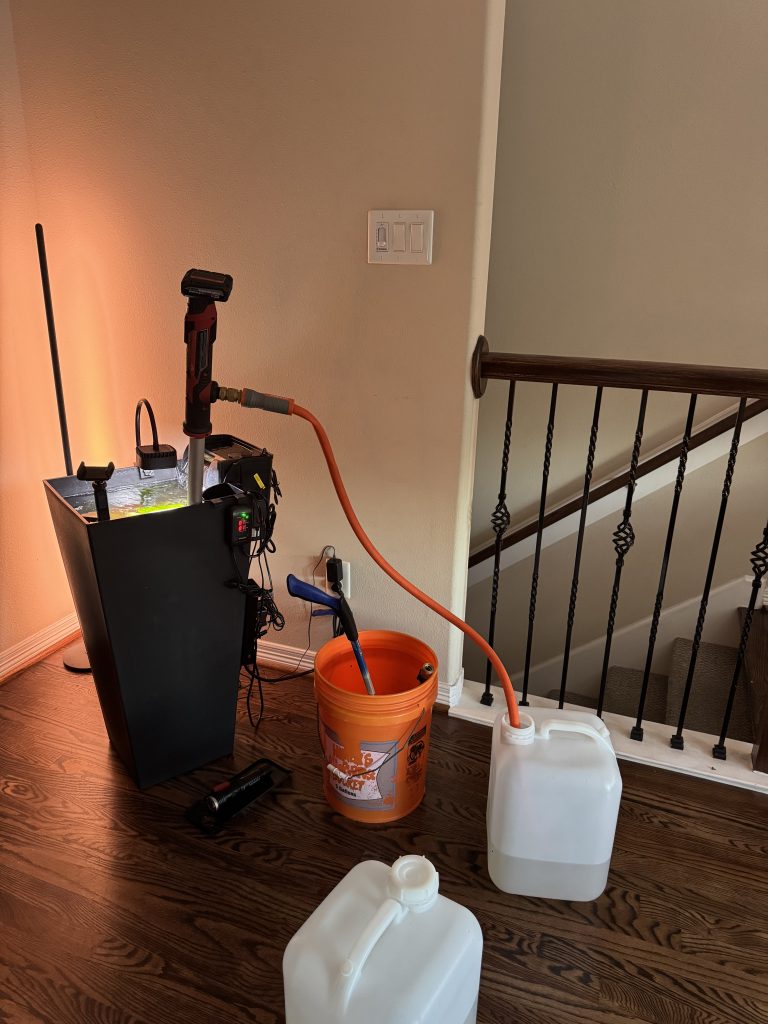
First order of business in case of a tank crash is to perform a 5 gallon aquarium water change.
Recovery Doesn’t Happen Overnight
Unlike replacing a filter or topping off water, rebuilding a living ecosystem takes time.
The beneficial bacteria must re-establish themselves, algae begin growing again, microscopic organisms return, and the nitrogen cycle gradually stabilizes. During this period, water chemistry can fluctuate significantly, making patience essential.
Attempting to “fix” everything at once often causes more instability than allowing nature to recover gradually.
Signs of Recovery
As the aquarium heals, you’ll begin noticing positive changes:
- Water becomes clearer.
- Ammonia and nitrite return to zero.
- Fish behave more naturally and become more active.
- New algae growth appears on rocks and decorations.
- Plants begin producing fresh leaves.
- The tank develops a more stable, balanced appearance.
These are all signs that the ecosystem is rebuilding itself.
Preventing the Next Crash
Most crashes can be avoided through consistency rather than constant intervention.
Maintaining stable water temperature, ensuring adequate oxygen—especially at night—avoiding overfeeding, performing regular maintenance, and allowing beneficial bacteria to thrive are the foundations of a healthy aquarium.
A mature tank is remarkably resilient, but even healthy ecosystems have limits. Small problems caught early are far easier to correct than major crashes.

How ZenTank Helps
At ZenTank, we don’t simply maintain aquariums—we care for living ecosystems.
Our maintenance program focuses on preserving biological stability through regular monitoring, preventive care, and early intervention before small issues become major problems. By maintaining healthy oxygen levels, balanced water chemistry, and thriving biological filtration, we help your aquarium remain beautiful, stable, and healthy year-round.
A tank crash doesn’t mean failure—it simply means the ecosystem has lost its balance. With proper care and patience, nature has an incredible ability to recover, and often returns even stronger than before.
Leave a Reply